
In recent years, the digital landscape has undergone a fundamental transformation, reshaping how travelers, entrepreneurs, and remote workers connect globally. For digital nomads in particular, staying online and reachable across borders has shifted from luxury to necessity. Yet, while the rise of eSIM technology offers unprecedented flexibility, many still misunderstand how it works. Misconceptions about security, compatibility, pricing, and even the role of an international phone number for eSIM remain widespread. This post from esimm8.com aims to separate fact from fiction—through insights grounded in real-life experiences.
Understanding the Basics: What an eSIM Really Is
An eSIM (embedded SIM) is not a new kind of network or data plan—it is simply a digitally activated SIM profile built into your device. Unlike traditional SIM cards, there’s no need for a physical chip or slot. It allows users to store multiple plans simultaneously, switch between them seamlessly, and manage their connectivity through software rather than hardware. For digital nomads moving from Bali to Barcelona, that means a faster, easier way to maintain connectivity without the clutter of plastic cards or queues at airport kiosks.
However, misconceptions persist. Some believe eSIMs are tied to specific devices or regions—when in fact, compatibility depends on the manufacturer and carrier, not geography. Others assume that eSIMs are insecure or easily hacked, which is inaccurate. The technology uses the same encryption standards as physical SIMs, offering equivalent protection for data and identity. As we’ll see, real-world experiences tell a more nuanced story.
Case Study: Lisa, the Remote Creative
Lisa, a freelance graphic designer from Sweden, spent years traveling across Asia. Before adopting an eSIM solution, she relied on local SIM cards at every border crossing. That routine meant juggling multiple phone numbers, losing contact with clients who couldn’t keep track of the latest number, and wasting hours reconfiguring messaging apps. When she switched to eSIM M8, her experience changed dramatically.
Lisa subscribed to a plan that included an international phone number for eSIM—a single number that remained active across countries. Clients could reach her seamlessly, and she managed different local data plans within her eSIM profile. Her productivity increased, her communication stabilized, and she realized that using eSIM was not about technology hype—it was about practical advantage. Through her story, we can isolate a few common myths worth revisiting.
Myth 1: eSIMs Are Expensive
This misconception arises mainly from early adopters who associated eSIM with premium devices or business travelers. Today, eSIM plans are widely available at affordable rates, often cheaper than local SIM cards. Many providers price data flexibly, allowing users to buy only what they need. For nomads, this makes cost control easier, especially when projects or travel itineraries change suddenly. Lisa’s monthly expenses dropped noticeably after switching—primarily because she could select region-specific plans without paying for new physical cards every time.
Myth 2: eSIMs Lack Support in Developing Markets
Another common assumption is that eSIM technology works only in major cities or technologically advanced regions. This is no longer true. Over the past three years, mobile operators in emerging markets have rapidly adopted eSIM support, recognizing its importance for tourism and remote work ecosystems. In Lisa’s travels through Vietnam, Indonesia, and Cambodia, each region offered compatible plans. By preloading them before arrival, she avoided the uncertainty of local kiosks and stayed connected instantly upon landing.
Myth 3: Switching Between eSIMs Is Complicated
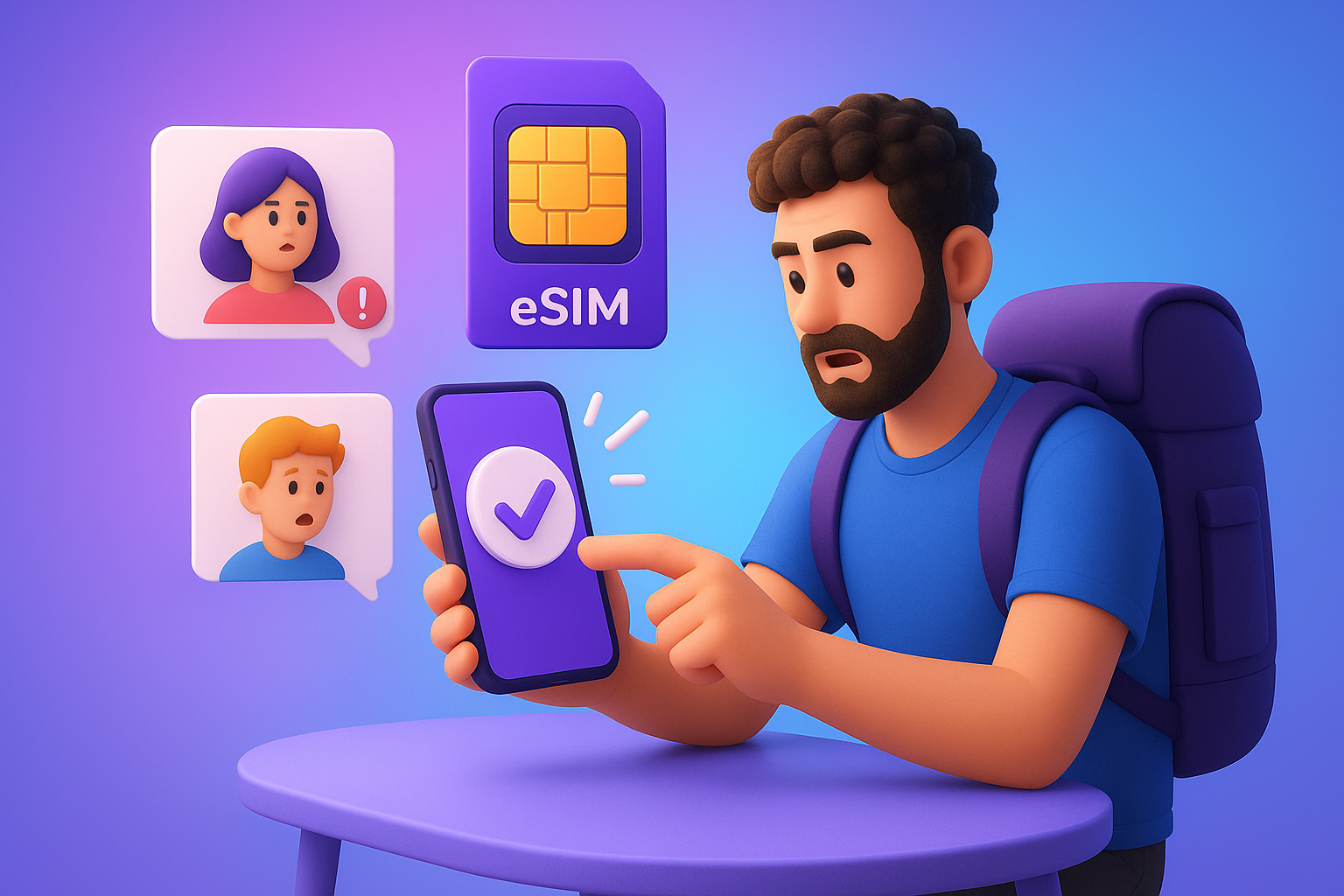
The phrase “digital SIM management” tends to intimidate users unfamiliar with digital tools. However, modern operating systems—like iOS and Android—have simplified eSIM activation. The process is now as simple as scanning a QR code or entering an activation code from the provider. During a multi-stop trip, Lisa would scan a new plan before departure, and her phone automatically switched networks upon arrival. The entire process took less than two minutes, with no lost connectivity in between. The convenience motivated her to stick with eSIM technology permanently.
Myth 4: You Must Sacrifice a Local Number
Traditional SIM swapping made it easy to acquire a local number—but at the cost of constantly changing contact information. eSIMs solve that problem through the option of adding an international phone number for eSIM as a stable identity layer. Lisa used her international number for client calls, while still receiving local numbers for domestic rates in each country. The dual setup gave her global consistency and local relevance simultaneously. This model is particularly effective for digital nomads who balance both personal and professional communication abroad.
Myth 5: eSIMs Are Less Secure Than Physical SIMs
Security discussions often revolve around what users can’t see. Because eSIM technology is intangible, some assume it’s easier to compromise. The reality is the opposite. eSIMs are embedded into a device’s secure element, a chip designed to resist tampering and unauthorized access. Furthermore, remote provisioning uses encrypted connections with carrier authentication. Unlike physical SIMs, eSIMs cannot be stolen physically or swapped without consent, reducing vulnerability in theft scenarios. Lisa experienced this first-hand when a friend lost her phone overseas—retrieving a new number was a bureaucratic nightmare, while Lisa’s eSIM profile could simply be re-downloaded to a replacement device.
Myth 6: eSIMs Are Only for Advanced Devices
Early on, only flagship smartphones supported eSIM functionality. Now, mid-range and even some entry-level models include it. Laptops, tablets, and smartwatches are following closely. This wider compatibility reduces barriers for digital nomads who rely on multiple devices. From editing a portfolio on a tablet to joining conference calls on the go, maintaining consistent data access across gadgets is no longer a challenge. The democratization of eSIM support aligns perfectly with the way remote professionals work today: fluidly, flexibly, and globally.
Observations from a Grounded Realist’s Perspective
It’s easy to be captivated by technology trends, but eSIM adoption isn’t about chasing novelty—it’s about simplifying a global lifestyle. From airports to co-working spaces, the goal remains constant: reliable communication. Those who resist eSIM often do so because of misunderstanding, not experience. The more realistic view sees eSIM not as an add-on but as infrastructure—a small, often invisible piece of the digital mobility puzzle that keeps everything else functioning smoothly.
Lisa’s case illustrates that convenience doesn’t have to compromise reliability. By merging an international phone number for eSIM with localized data options, she effectively created a global communications system on her phone. The result? Less stress, more productivity, and fewer surprises on her billing statement. Her story confirms what careful observation already suggests: travel freedom today depends as much on how we manage our connectivity as where we choose to work from.
Common Questions Clarified
1. Can I use more than one eSIM? Yes. Many modern devices support multiple profiles, allowing you to store global and regional plans side by side.
2. What happens when I change phones? Your eSIM plan can be transferred by re-downloading the activation data. It’s faster than transferring a physical SIM.
3. Will an eSIM affect my battery life? Minimal difference. Modern connectivity chips are designed for efficiency regardless of SIM format.
4. Can I still make calls if I only use data via eSIM? Absolutely—Voice over Internet Protocol (VoIP) apps like your messaging or meeting platform handle calls over data networks seamlessly.
5. Is there a privacy risk? eSIM security standards are globally regulated and audited, making unauthorized access exceedingly rare.
Conclusion: Clearing the Path Forward for Digital Nomads
The eSIM conversation is no longer futuristic—it’s practical and ongoing. As digital nomads continue to redefine the concept of borders, reliable connectivity forms the backbone of their professional and personal freedom. Misunderstandings around cost, safety, or compatibility only slow down progress. Through the grounded lens of real-world examples, the technology proves itself not as a luxury, but as a logical next step in digital mobility.
At esimm8.com, we encourage global workers to explore this tool with informed confidence. Whether you need an international phone number for eSIM, plan management tips, or technical insights, our resources are designed to keep you connected wherever the next co-working adventure leads. Read more on our blog to deepen your understanding and take control of your digital journey.


