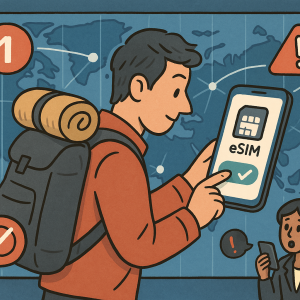

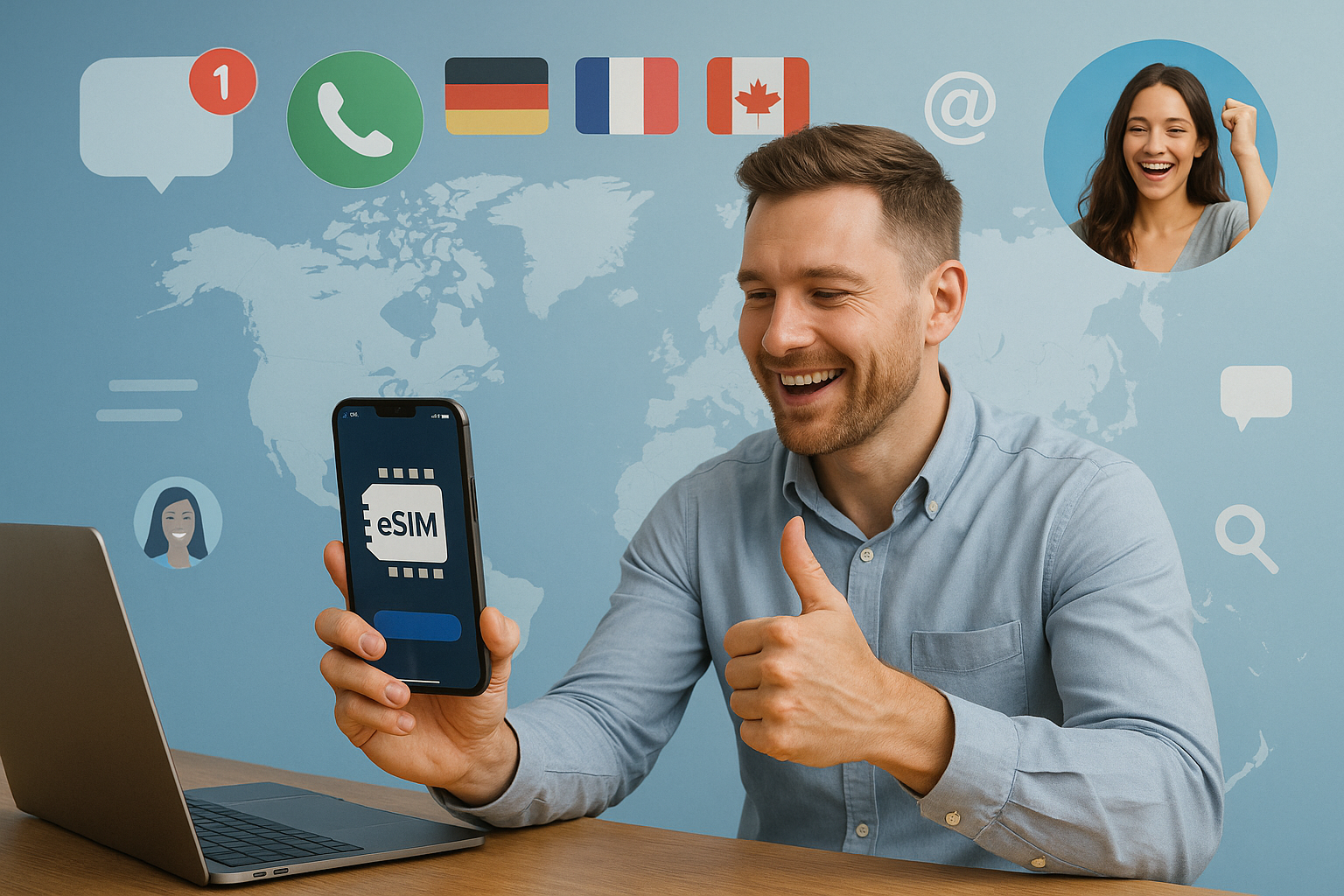
In a rapidly digitizing world, the way professionals connect, collaborate, and conduct business has transformed dramatically. For expatriates, entrepreneurs, and digital nomads, mobility has become more than a lifestyle—it’s a necessity. Yet, behind the romanticized image of working from a beachside café lies a series of very real challenges: inconsistent connectivity, costly mobile plans, and logistical headaches inherent to managing communication across borders. At esimm8.com, we understand that today’s global workforce needs stability, flexibility, and secure digital solutions. This post delves into the realities of working abroad, offering grounded insights on how to overcome connectivity challenges through practical strategies, including the adoption of an eSIM for business communications.
The Reality of Global Mobility: Beyond the Ideal
There is no shortage of inspiration when it comes to remote work. Social media overflows with images of digital nomads sipping coffee in Lisbon or entrepreneurs managing global teams from Thailand. What’s often omitted is the constant negotiation between convenience, cost, and connection. As any experienced expatriate knows, the “freedom” of working remotely can quickly dissolve into frustration when faced with unstable Wi-Fi, unclear local regulations, and endless SIM swaps. These challenges hinder productivity and can isolate professionals from their clients and teams.
At a deeper level, connectivity problems reveal a broader truth about globalization: while digital infrastructure has expanded, access and consistency still vary across borders. The professional who assumes that technology will simply “work everywhere” is often the one most caught off guard.
Challenge One: Fragmented Communication Channels
For multinational teams, communication might seem streamlined through cloud platforms, but at the ground level, problems proliferate. Switching between local SIM cards during travel can disrupt two-factor authentication processes, banking access, and security protocols tied to specific phone numbers. Meanwhile, startups and small businesses face inflated roaming bills or delays when waiting for physical SIM shipments to arrive in new countries.
These disruptions create tangible costs. Missed calls, delayed responses, and security lapses can directly impact brand credibility. A business can’t build cohesive workflows without dependable communication systems. Here is where an eSIM for business communications becomes not just beneficial, but transformational. It allows enterprises and individuals to manage multiple profiles on one device, transition seamlessly between networks, and maintain stable contact without switching hardware.
Challenge Two: The Cost of Constant Connectivity
Achieving global mobility often entails invisible expenses. Traditional roaming packages are structured to capitalize on short-term travelers rather than perpetual movers. Over time, these cumulative costs erode profit margins and personal budgets. Managing data costs in a sustainable way requires an honest assessment of usage habits, travel frequency, and the digital tools you depend on.
The transition to eSIM technology offers a pragmatic solution. Unlike traditional SIMs, eSIMs allow users to compare and activate data plans instantly, selecting tariffs that align with specific needs. Businesses operating remotely can negotiate or scale usage without physical distribution, reducing administrative waste. As a result, teams can stay connected while maintaining cost discipline—an invaluable advantage in uncertain economic climates.
Challenge Three: Security and Privacy on the Move
Public Wi-Fi remains a double-edged sword. While convenient, it exposes nomads to unnecessary cyber threats. Data breaches, phishing attacks, and unauthorized access are growing concerns among global professionals. Expatriates, in particular, handle sensitive transactions and communications that demand a higher level of protection.
A modern eSIM framework enhances digital security by allowing encrypted communication over certified mobile networks. It eliminates the vulnerabilities associated with swapping physical SIMs, thereby minimizing risks tied to lost or compromised cards. For companies with distributed workforces, establishing standardized connectivity protocols ensures compliance and strengthens the digital perimeter.
Challenge Four: Maintaining Productivity Across Time Zones
Constant travel forces remote workers to recalibrate schedules, reset routines, and maintain mental clarity across shifting time zones. Even the best communication platforms struggle when connectivity isn’t there to support them. Reliable data access becomes the silent backbone of productivity.
Digital consistency directly affects performance. Whether it’s cloud-based project management, client calls, or online sales monitoring, every minute offline translates to lost revenue or opportunity. Integrating an eSIM for business communications ensures that logistical transitions between borders don’t interrupt output. It’s a small decision with significant operational consequences. By removing one major variable—connectivity—professionals reclaim time and focus that can be redirected toward innovation.
Challenge Five: Regulatory Barriers and Local Adaptations
Operating across multiple jurisdictions introduces complexities beyond connectivity. Each nation has its telecommunications framework, and navigating them often means deciphering local compliance standards and consumer protection laws. When you depend on physical carriers, you’re bound by local restrictions on distribution and activation. With eSIMs, these frictions dissolve. A single platform can satisfy multiple regional requirements while maintaining service continuity.
Additionally, businesses scaling globally find eSIMs beneficial for managing fleets or teams abroad. Activation and identity verification become centralized processes instead of repetitive local tasks. This system-level efficiency reflects a maturity that modern digital operations require—a readiness to adapt with agility rather than simply react to obstacles.
Practical Tips for Mastering Connectivity as a Digital Expat
1. Audit your digital dependencies — Before leaving a home base, identify mission-critical tools and evaluate what requires consistent connectivity. Plan redundancy measures for essential platforms.
2. Use dual-network backup solutions — Combine Wi-Fi and cellular data to ensure coverage even in unpredictable regions.
3. Leverage eSIM technology early — Acquire and configure your eSIM for business communications before relocating. This pre-setup minimizes downtime during transition.
4. Prioritize security-first practices — Use VPNs, encrypted messaging apps, and zero-trust authentication to safeguard remote workflows.
5. Budget for flexibility — Connectivity costs fluctuate. Dedicate a portion of your operational budget to agile tech resources like eSIM data packages that can be activated or paused on demand.
6. Network locally, connect globally — Even when technology handles communication, personal presence still builds trust. Attend local meetups to blend digital efficiency with community awareness.
7. Monitor legal updates — Stay informed about telecom regulations affecting data privacy and SIM registration in your host country.
8. Assess performance regularly — Track data usage, latency, and reliability metrics monthly to identify patterns and optimize providers proactively.
9. Balance autonomy and structure — Freedom doesn’t mean improvisation. Create standardized routines to maintain professional reliability.
10. Align technology with purpose — Every tool should serve a tangible business or personal development goal. Avoid excess apps and focus on what supports sustainability.
A Challenge-Based Perspective
Embracing a mobile career isn’t about escaping systems—it’s about redesigning them to support personal freedom and professional excellence simultaneously. Every connectivity challenge faced by expatriates and businesses is also a learning opportunity. Adopting technologies like eSIM is not only a matter of convenience but of foresight. It signals a commitment to adaptability, a recognition that the global digital economy rewards those who can operate fluidly within its changing boundaries.
The key lies in grounded preparation. Realists understand that freedom is earned through structure, and success abroad is built on pragmatic decisions. Reliable communication is foundational to that success, and with platforms such as esimm8.com, achieving that balance is increasingly attainable.
Conclusion: Building the Future of Work, One Connection at a Time
As the world grows more interconnected, it also becomes more complex. Digital nomads and expatriates will continue to redefine what global business means, but their success depends largely on mastering the unseen infrastructure—the lines, signals, and data packets that hold modern enterprise together. Reliable connectivity is not a luxury; it’s a professional necessity. By understanding the obstacles and leveraging solutions like an eSIM for business communications, mobile professionals gain not just better technology, but greater control over their futures.
Explore our services at esimm8.com and discover how seamless connectivity can empower your journey, wherever business takes you next.