

For frequent travelers and digital professionals, staying connected across borders can either supercharge productivity—or completely derail it. In this case study, we’ll dissect how Rachel, a six-figure freelance UX designer based between Lisbon and Bali, overhauled her international connectivity setup using eSIM technology from esimm8.com. We’ll walk through her experience step by step, and break down the pros and cons of switching to eSIM from traditional SIM cards, so you can decide if it’s the missing piece in your own digital workflow puzzle.
Who is Rachel? Why Her Story Matters
Rachel is your typical digital nomad archetype: laptop bag, noise-canceling headphones, and a work schedule that hops from coworking spaces in Thailand to iced lattes in Portugal. Before she discovered esimm8.com, her life was a whirlwind of switching local SIM cards, standing in queues at foreign airports, and praying for reliable hotspots in unfamiliar places. The inefficiencies weren’t just annoying—they were costing her client assignments and limiting her emergency responsiveness.
The Problem: Cross-Border Connectivity Chaos
Before adopting eSIM, Rachel faced three core issues that many remote workers grapple with:
- Data Downtime: New country, temporary blackout. During travel days, she’d lose access to maps, Slack, and important email threads—a major issue when juggling multiple clients across time zones.
- Logistical Lag: Buying a local SIM in every country meant hunting down stores on arrival, trying to understand foreign telecom plans with language barriers, and wasting valuable work hours.
- Emergency Unpreparedness: Perhaps the most dangerous flaw—if her local SIM didn’t include roaming or wasn’t topped up properly, she’d be unreachable in a crisis.
Her tipping point came during a layover in Istanbul, when a delay left her stranded overnight and completely offline. Lost with no mobile data, she couldn’t access her digital boarding passes, rebookings, or even reach her Airbnb host. That’s when Rachel realized: something had to change.
The eSIM Shift: Exploring esimm8.com
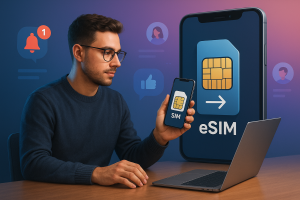
After researching various providers, Rachel landed on esimm8.com. She was drawn in by their emergency-ready eSIM capabilities and seamless global coverage. Within ten minutes, she’d signed up, selected a Europe + Asia plan, and had a functioning eSIM profile active on her iPhone.
This was Rachel’s new process:
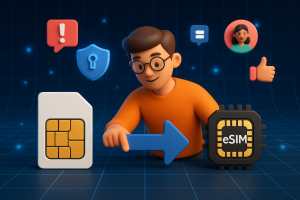
- Purchase an eSIM plan online before she traveled
- Scan a simple QR code to install the eSIM
- Activate the eSIM the moment her plane touched down—instantly connected
The impact was immediate, but it wasn’t without trade-offs.
Pros: Why eSIM Became Her Secret Weapon
Here’s what Rachel loved the most:
1. Immediate Connectivity
No more hunting down phone shops or praying Wi-Fi would hold. Rachel could now land in any country and get connected within minutes. The built-in emergency-ready eSIM capabilities meant that no matter what curveball was thrown her way—delayed flight, rerouted destination, hotel change—she had mobile data and SMS access to adjust her game plan in real time.
2. Multiple Profiles, One Phone
Using eSIM technology allowed Rachel to maintain her primary number for WhatsApp and local logistics, while simultaneously running data-specific eSIMs based on her travel region. This dual-SIM convenience removed the need for carrying a second phone or switching SIM cards on the fly.
3. Flexible, Pay-As-You-Go Plans
esimm8.com gives users the ability to top up or change plans without subscription traps or long-term commitments. Rachel could switch from a 30-day plan in Indonesia to a 10-day booster during a spontaneous European trip. The control lies in the backend dashboard, which she found refreshingly intuitive.
4. Global Support, Minimal Anxiety
Knowing that support was available 24/7 through esimm8.com gave Rachel peace of mind. She once encountered a setup delay in Vietnam and was walked through troubleshooting via live chat in under 10 minutes. Compare that to the hour-long waits she once spent at a telecom kiosk in Mexico City, and the contrast speaks for itself.
Cons: The Compromises of Switching to eSIM
It wasn’t all flawless. Rachel did encounter a few downsides that might help you set better expectations as you consider making the same switch.
1. Initial Learning Curve
Digital setup doesn’t always feel simple—especially if you’re not tech-savvy. Rachel initially struggled with unfamiliar smartphone settings and needed to learn how to toggle between mobile networks. Fortunately, esimm8.com offered clear guides and video walkthroughs that eased the onboarding.
2. Device Compatibility
Not all devices are eSIM-enabled. Rachel’s iPhone 14 was fully compatible, but her backup Android device was not. If you’re on an older phone without eSIM capabilities, this might be a limiting factor until you upgrade.
3. Data-Only Plans (No Local Voice Calls)
While Rachel rarely needed to make traditional voice calls, it’s worth noting that many eSIM plans from esimm8.com are data-only. For locals trying to reach you via traditional mobile call formats (e.g., a hotel receptionist), a backup VoIP app is required.
4. Less Tangible Physical Backup
With physical SIM cards, Rachel could always carry a spare and physically swap whenever one failed. With eSIM, problems (though rare) might require remote intervention. If you’re someone who feels anxious without something in-hand, this adjustment may feel abstract at first.
Business Upshot: How eSIM Supercharged Rachel’s Work Life
After using esimm8.com for six months, Rachel reported real improvements:
- +17% increase in project turnaround, thanks to uninterrupted communication during travel days
- Zero client loss during country transitions—a first in her freelance career
- 50+ hours saved by eliminating SIM shopping and setup frustrations
- Better mental bandwidth—less travel anxiety meant more creative energy
One standout moment? While traveling between Montenegro and Albania, Rachel unexpectedly had to jump into a product review call. With no local SIM, her traditional setup would’ve failed. Thanks to esimm8.com, she tethered to her eSIM data, launched Zoom, and preserved a $6,000/month client relationship—all from a hillside Airbnb patio.
Is eSIM Right for You?
If you live and work across borders like Rachel, the numbers speak for themselves. Even with its trade-offs, the pros of an emergency-ready eSIM far outweigh the cons for anyone who prioritizes real-time communication and operational agility. Whether you’re freelancing from Bali, managing teams in Guatemala, or attending crypto conferences in Europe, staying online isn’t optional—it’s mission-critical.
With the right provider, setup is painless and support is just a tap away. Rachel’s journey from SIM chaos to seamless connectivity proves that digital nomads can level up their workflows, reduce travel stress, and turn every airport gate into a productive office.
Ready to Take Control of Your Mobile Connectivity?
Explore our services at esimm8.com and find an eSIM plan tailored to your regions, duration, and digital lifestyle needs. Use our emergency-ready eSIM capabilities to stay one step ahead—no matter where in the world you wake up tomorrow.