

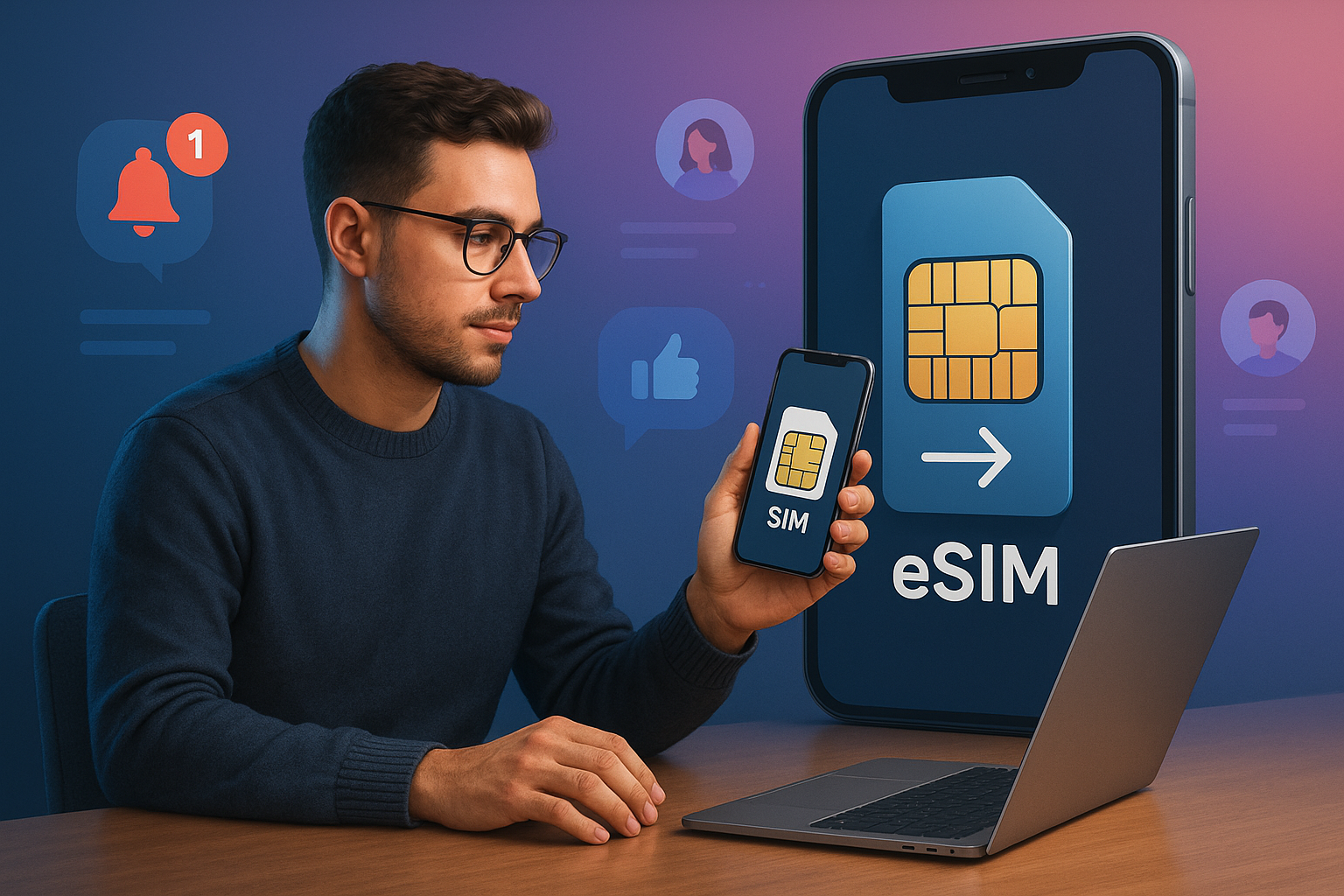
In the fast-changing digital landscape, developers and integrators are key players in crafting seamless connectivity solutions. Yet, as eSIM technology becomes mainstream, misconceptions still cloud decision-making. At esimm8.com, we’ve encountered numerous myths that slow innovation and obscure the real potential of eSIMs—especially when it comes to emergency-ready eSIM capabilities.
1. “eSIMs Are Only for Smartphones”
One of the most widespread myths is that eSIMs are a smartphone-exclusive innovation. In reality, their true power lies in scalability across devices. Today, eSIM technology is driving IoT deployments, fleet management, medical devices, and even wearable tech. Developers and integrators can program eSIMs directly into hardware designs—creating flexible, always-connected devices. This shift allows businesses to manage global connectivity from a single digital platform rather than juggling multiple SIM vendors.
2. “Integrating eSIM Is Complicated and Expensive”
Yes, early generations of eSIM technology seemed complex, but modern solutions are built for simplicity. Platforms such as esimm8.com are designed specifically with developers in mind—offering APIs, sandbox environments, and documentation that make integration secure and smooth. The cost model has also evolved: no physical SIM logistics means fewer shipping and inventory burdens, plus faster global rollouts. What was once a high barrier to entry is now a low-lift, high-return digital investment.
3. “eSIMs Can’t Handle Emergencies or Failover Situations”
It’s a dangerous misconception to think eSIMs aren’t reliable in critical situations. In fact, emergency-ready eSIM capabilities are one of the biggest advantages of the technology. When a primary network fails, an eSIM can instantly switch to a backup profile—keeping vital services online. Developers can script automated failovers, ensuring remote sensors, medical devices, or connected vehicles remain operational, even during network disruptions. Reliability, not fragility, defines next-gen eSIM design.
4. “Switching Carriers with eSIMs Is Difficult”
Traditional SIMs lock devices into carriers, but eSIMs break this limitation. The idea that switching profiles is tough is outdated—current standards support remote provisioning with a few API calls. Developers can give users the freedom to select or change carriers dynamically, turning connectivity into a feature rather than a fixed constraint. This agility enhances customer satisfaction and enables integrators to tailor solutions for different markets without retooling hardware.
5. “eSIMs Aren’t Secure Enough for Enterprise Solutions”
Security remains top of mind, but the assumption that eSIMs are vulnerable is misplaced. By design, eSIMs include hardware-level encryption and leverage secure remote provisioning standards defined by GSMA. Unlike plastic SIM cards, which can be physically tampered with, eSIMs are embedded and digitally managed—reducing exposure to theft or cloning. Enterprises adopting eSIM infrastructure gain both compliance and confidence when scaling connected systems globally.
Conclusion: Shaping an Agile, Connected Future
As with any transformative technology, understanding is the first step toward innovation. eSIMs are not just a telecom trend—they’re a blueprint for how developers and integrators can rethink global connectivity. From IoT deployments to resilient backup communications, embracing emergency-ready eSIM capabilities means preparing your solutions for both everyday efficiency and critical contingencies.
At esimm8.com, we’re on a mission to clear the fog around digital connectivity. Explore our services today and see how you can build smarter, more adaptive applications with eSIM technology at the core.


