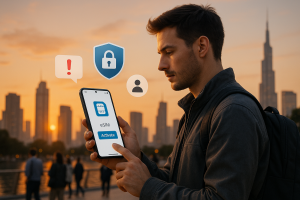


As a small business owner, staying connected while traveling internationally is not just convenient—it’s essential. With remote teams, global clients, and ever-growing digital operations, seamless communication is a strategic advantage. That’s where eSIM technology comes in, offering a flexible and cost-effective alternative to traditional mobile roaming. But is it the right fit for your business? At esimm8.com, we bridge knowledge gaps around connectivity tools for small businesses. In this article, we’ll walk you through the key pros and cons of using eSIMs for business travel, helping you make an informed decision.
1. Pro: Instant Global Connectivity
eSIMs eliminate the need to swap physical SIM cards in different countries. With support from the best eSIM app for calls and texts, you can download a local data plan instantly and get online in minutes upon landing—no more airport SIM kiosks or language barriers. This means quick deployment for your team and uninterrupted communication with clients.
2. Con: Limited Carrier Compatibility
Although eSIM technology is rapidly expanding, not all mobile carriers or devices support it yet. Some older phones may require physical SIMs, and network availability might vary by region. For small businesses with a mix of device capabilities, this could present a logistical obstacle.
3. Pro: Reduced Mobile Roaming Costs
International roaming fees add up quickly, especially if you or your team travel frequently. eSIMs allow small business owners to avoid exorbitant charges by connecting to local networks via cost-effective prepaid plans. This streamlines budgeting and prevents unpleasant billing surprises.
4. Con: Learning Curve for Setup
If your team isn’t tech-savvy, there might be a slight learning curve when setting up and managing eSIM profiles. Not all apps offer user-friendly interfaces. That’s why it’s important to use the best eSIM app for calls and texts—one that prioritizes ease of use and customer support.
5. Pro: Remote Profile Management
Business owners and IT managers can remotely configure and manage eSIM profiles for their teams. This simplifies logistics when onboarding new employees or deploying international operations. It’s a digital-first approach that aligns well with the modern remote-work culture.
6. Con: Not Ideal for All Data Needs
Some eSIM plans offer limited data thresholds or throttling after a certain amount. For businesses relying on high-bandwidth tools like video conferencing, this could hinder productivity. Always review plan limitations before activating them for business-critical use.
7. Pro: Dual SIM Advantage
Most eSIM-compatible phones still include a physical SIM slot, allowing dual SIM functionality. This is ideal for business travelers who want to maintain their primary number while using a local data plan. You can separate personal use from business activity without carrying multiple devices.
8. Con: Security and Privacy Considerations
While eSIMs are generally secure, data privacy and cyber threats remain concerns—especially if you connect to unfamiliar networks abroad. It’s crucial to use a verified provider and activate security practices such as VPNs and two-factor authentication.
Conclusion: eSIM technology offers small business owners a powerful tool for global connectivity, simplifying international travel while saving time and money. But like any digital solution, it comes with its own set of trade-offs. By weighing these pros and cons, you can determine whether adopting eSIMs aligns with your business goals and tech capabilities. At esimm8.com, we help you make smarter, tech-backed decisions for travel and communication. Looking to dive deeper? Read more on our blog.